IoT Devices & Sensor Technology
Real-time data collection for environmental conditions, feed levels, and automated alerts, ensuring optimal living conditions.
- Continuous monitoring
- Automated alerts
- Data-driven insights
Get Jordan T. Finch's expert insights on market trends and strategic opportunities in poultry farming directly to your inbox.
Posted on: 2025-10-12
By: Jordan T. Finch
In an era where technology is crucial for success, the poultry farming industry stands to benefit immensely from data-driven strategies. Have you considered how adopting these technologies could transform your operations and enhance productivity?
Modern poultry farming leverages several key technologies to enhance efficiency and decision-making. Below, we highlight the core areas and their impact. For more insights on the broader industry, explore poultry market trends and forecasts.
Real-time data collection for environmental conditions, feed levels, and automated alerts, ensuring optimal living conditions.
Optimizes feed efficiency and monitors bird health by analyzing data to identify patterns and make precise adjustments.
Analyzes historical data to forecast trends, optimize production schedules, and make informed business decisions.
Streamlines operations by tracking resources, managing data, and simplifying record-keeping for better efficiency.
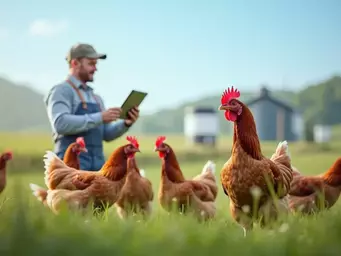
In today’s fast-paced world, data-driven technologies are becoming essential for success in poultry farming. At Poultry Farming Insights, we believe that embracing these technologies can significantly enhance farm management and decision-making processes. By integrating data into daily operations, farmers can achieve better efficiency, lower costs, and improved overall productivity.
Understanding the role of data is crucial. It allows us to make informed choices, from feed management to flock health monitoring. As we dive deeper into the modern poultry landscape, we’ll explore how various technologies are transforming the industry.
Data serves as the backbone of modern poultry operations, impacting every facet of farm management. By leveraging real-time data, farmers can monitor conditions and make strategic decisions that drive productivity. This data-driven approach not only empowers farmers but also enhances transparency and accountability within operations. To avoid common pitfalls, it’s important to understand how to identify pitfalls in poultry farming.
Moreover, by continuously analyzing data, farmers can react swiftly to any fluctuations in performance metrics, ensuring that their operations run smoothly.
Several key technologies are reshaping the poultry farming landscape, allowing farmers to operate more efficiently. Let’s take a closer look at these transformative technologies and how they contribute to enhanced operations.
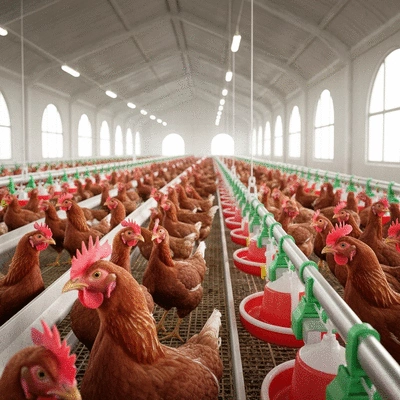
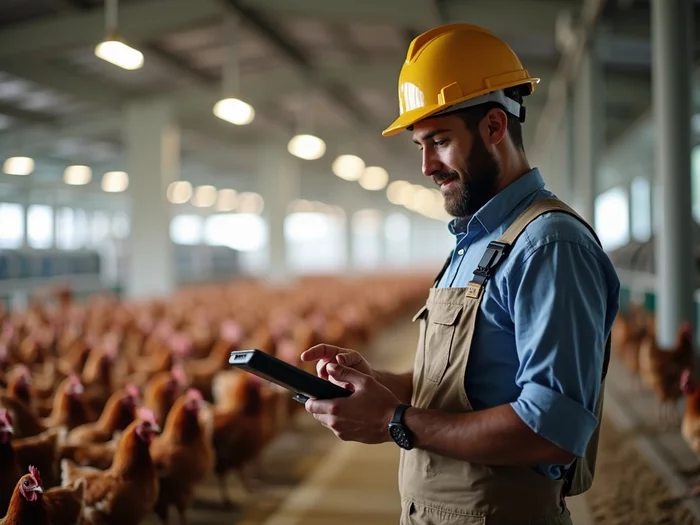
Internet of Things (IoT) devices and sensor technology are becoming game changers in poultry farming. These tools enable real-time data collection, providing insights that can improve farm efficiency and animal welfare. For example, sensors can monitor temperature, humidity, and even feed levels, ensuring optimal living conditions for the birds.
With these advancements, farmers can respond proactively to any issues, leading to healthier flocks and optimized production levels.
Artificial Intelligence (AI) plays a crucial role in optimizing poultry management. Advanced algorithms can analyze data from various sources to improve feed efficiency and monitor bird health. This technology allows farmers to identify patterns and make adjustments that can enhance productivity.
For instance, AI can help determine the ideal feed mix for different growth stages, leading to healthier birds and decreased feed costs.
Big data and predictive analytics are reshaping poultry operations by offering insights into trends and future outcomes. By analyzing historical data, farmers can anticipate demand, optimize production schedules, and make informed business decisions. This approach enables farmers to stay ahead of market trends and customer preferences.
With these tools in hand, poultry farmers can not only survive but thrive in an ever-evolving market.
Farm management software is essential for enhancing productivity and organization. These tools assist farmers in tracking their operations, managing resources, and simplifying record-keeping. By implementing effective software solutions, poultry farmers can focus more on strategic growth and less on administrative tasks.
Investing in the right farm management software can dramatically improve operational efficiency and ultimately lead to increased profitability.
Did you know? The integration of IoT devices in poultry farming can lead to a 20% increase in productivity by providing real-time insights into flock health and environmental conditions. Investing in these technologies not only enhances animal welfare but also boosts your bottom line!
As we delve into the future, it’s exciting to see how data-driven technologies are poised to revolutionize poultry farming. Each innovation not only promises to enhance efficiency but also supports sustainable practices. In the coming years, we will likely witness advancements that will reshape the industry landscape.
Let’s explore some of the most promising trends on the horizon that could greatly impact poultry operations, paving the way for smarter and more efficient farming methods.
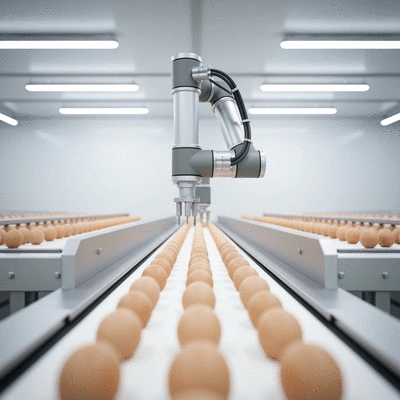
Robotics and automation are set to play a pivotal role in transforming poultry farming. These technologies can streamline various tasks, enabling farmers to focus on decision-making and strategy rather than routine chores. Here are a few ways farming robotics will influence the industry:
As we embrace these technologies, farmers will find that the initial investment pays off in terms of labor efficiency and flock health. By integrating robotics into daily operations, farms can operate with greater precision and achieve remarkable improvements in productivity.
To summarize, the integration of data-driven technologies is reshaping poultry operations in significant ways. From improved feed management through AI to enhanced efficiency with robotics, these advancements are not just trends—they’re becoming vital components of successful poultry farming. The benefits we discussed, including increased productivity and enhanced animal welfare, are just the beginning of what technology can offer.
Farmers who adopt these innovations will be well-equipped to navigate the challenges of an evolving market, ultimately leading to a more sustainable future for the poultry industry.
As I reflect on these trends, I encourage all poultry farmers to consider investing in data-driven solutions. Embracing technology isn’t just about keeping up; it’s about gaining a competitive edge that can lead to enhanced efficiency and sustainability. The poultry industry is at a crossroads, and those who adapt will be the ones who thrive.
Implementing technology can significantly reduce costs in poultry farming. Here are some strategies that can help:
By implementing these technologies, poultry farmers can not only slash operational costs but also enhance their overall profitability in a competitive market. Let's embrace these opportunities and shape the future of poultry farming together! For more on sustainability, consider these sustainable trends in poultry farming.
Here is a quick recap of the important points discussed in the article:
Data-driven technologies involve using real-time data collected from various sources (like IoT sensors, AI, and farm management software) to make informed decisions, optimize operations, and enhance productivity in poultry farming.
IoT devices and sensor technology provide continuous monitoring of environmental conditions (temperature, humidity), feed levels, and can issue automated alerts. This ensures optimal living conditions, better animal welfare, and data-driven insights for farmers.
AI applications analyze data to optimize feed efficiency, monitor bird health, and identify patterns. This allows farmers to make precise adjustments, such as determining ideal feed mixes for different growth stages, leading to healthier birds and reduced costs.
Predictive analytics uses historical data to forecast market trends, optimize production schedules, and make informed business decisions. This helps farmers anticipate demand, allocate resources efficiently, and identify potential risks and opportunities.
Farm management software streamlines operations by centralizing data, tracking resources, and simplifying record-keeping. It provides automated reporting and improved communication across teams, ultimately enhancing efficiency and profitability.
Future trends include increased adoption of robotics and automation for tasks like automated feeding, health monitoring via drones, egg collection, and cleaning. These technologies aim to improve labor efficiency, flock health, and overall precision in farming.
Yes, technology can significantly reduce costs through strategies like energy-efficient systems, predictive maintenance to prevent equipment failures, optimized feed formulation based on data, and labor optimization through automation of routine tasks.